On May 15, 2026, the Posts and Telecommunications Institute of Technology (PTIT) held a commendation ceremony to honor collectives with outstanding achievements in science and technology activities in 2025.
At the ceremony, the Faculty of Telecommunications 1 was honored with a certificate of merit titled:
“Leading Unit in the Number of International Scientific Publications in 2025.”
This achievement reflects the persistent efforts and dedication of the faculty members and staff of the Faculty of Telecommunications 1 in scientific research activities. Over the past years, the Faculty has actively promoted key research areas including telecommunications, next-generation wireless networks, applied artificial intelligence, optical communications, and quantum communications.
In addition to improving educational quality, the Faculty of Telecommunications 1 continuously focuses on developing an in-depth academic research environment, strengthening international collaboration, and encouraging lecturers and students to publish their research in prestigious international conferences and journals.
This accomplishment not only affirms the research capability and innovative spirit of the Faculty’s academic staff, but also contributes to enhancing the academic reputation of the Posts and Telecommunications Institute of Technology within both national and international research communities.
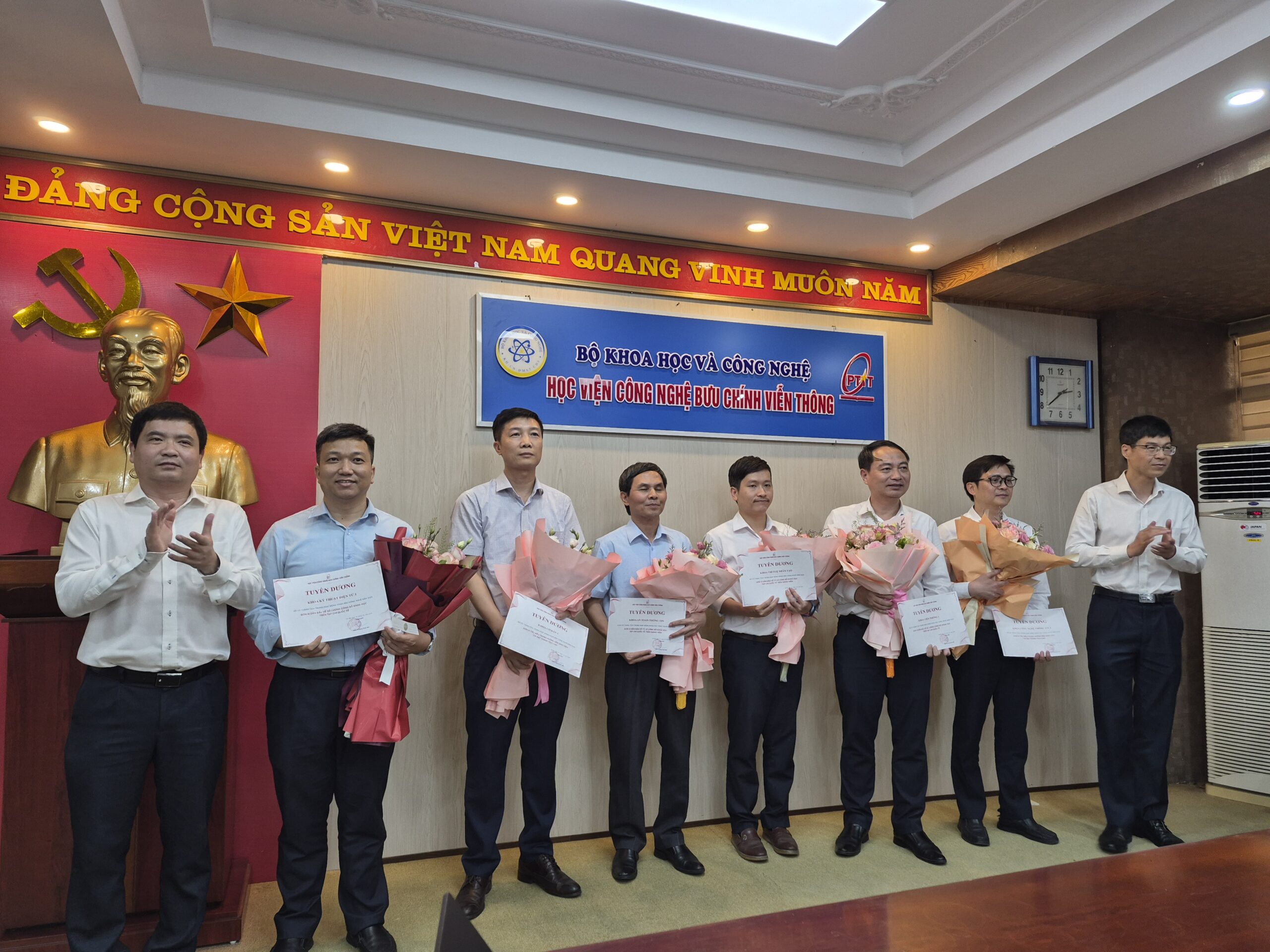
Assoc. Prof. Dr. Đặng Thế Ngọc, Head of the Faculty (third from the right), on behalf of the Faculty of Telecommunications 1, received the certificate of merit and flowers from Prof. Dr. Từ Minh Phương, Secretary of the Party Committee of the Institute, and Assoc. Prof. Dr. Đặng Hoài Bắc, President of the Institute.

Flowers and the certificate of merit awarded to the Faculty of Telecommunications 1 for the achievement: “Leading Unit in the Number of Scientific Publications in International Journals in 2025.”
In the coming years, the Faculty of Telecommunications 1 will continue to leverage its research strengths, expand academic collaborations, and train high-quality human resources to meet the development demands of the information and communications sector in the digital era.