Starting in the 2026-2027 academic year, PTIT will launch a program in Aerospace Communication Engineering as a pioneering step to anticipate the demand for high-tech human resources in the new digital and space era. The program aims to train engineers capable of mastering satellite communication technologies, space-based connectivity systems, and information infrastructure serving modern aerospace.
More than just a new training program, this represents PTIT’s direction in gradually approaching core technologies, strategic technologies, and new development spaces of the future.
A new training program will attract a lot of interest and enthusiasm, but it will also raise some concerns. Therefore, the PTIT editorial board interviewed Assoc. Prof. Dr. Dang The Ngoc – Deputy Head of the Telecommunications Department 1 – to clarify career opportunities, training orientation, and development potential in the field of Aerospace Communication Engineering. Below is the content of the interview.
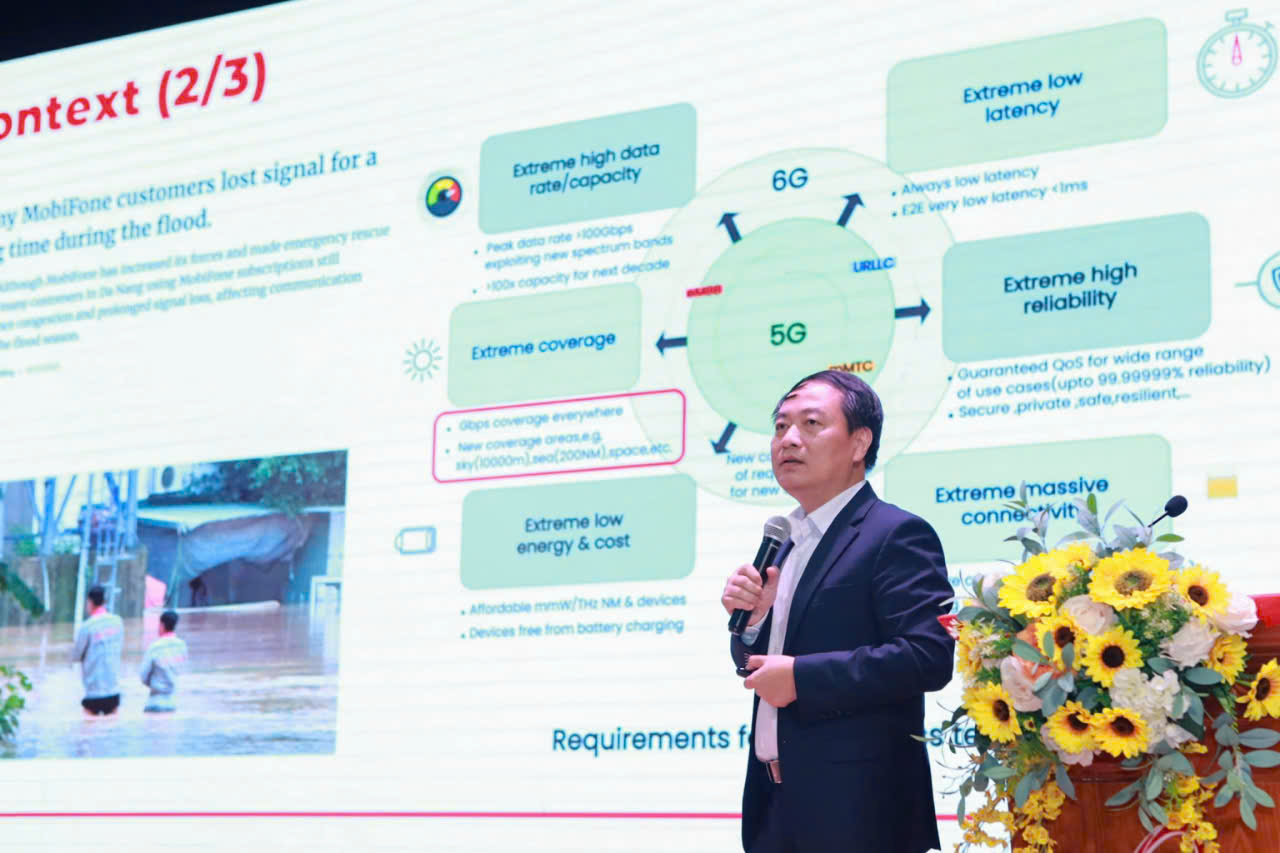
Assoc. Prof. Dr. Dang The Ngoc – Deputy Head of Department, in charge of Telecommunications Department 1
Editorial Board: Sir, given that Vietnam does not yet have a large aerospace industry, on what basis does PTIT believe that the demand for human resources in this field will increase significantly in the future?
Assoc. Prof. Dr. Dang The Ngoc: PTIT decided to launch the Aerospace Communication Engineering program at this time because we believe this is the stage where Vietnam needs to prepare human resources for a new strategic field, instead of waiting until the market is fully developed before starting training.
Currently, the global space industry is entering a period of rapid growth with the “NewSpace” model, where telecommunications, technology, and data companies are deeply involved in satellite and space infrastructure. Over the next 5-10 years, the world is expected to deploy tens of thousands of new satellites to serve broadband internet, global connectivity, Earth observation, defense, and next-generation digital services. This will create a huge demand for satellite communications engineers, space network engineers, control systems engineers, navigation and positioning engineers, and AI specialists for space infrastructure.
More importantly, current technological trends show that the boundaries between telecommunications and space technology are gradually blurring. New generation 5G/6G mobile networks are all moving towards integrating satellites and terrestrial networks. In other words, satellites will no longer be a separate field but will become part of the global telecommunications infrastructure in the future. This is why PTIT – with its core strengths in telecommunications electronics and digital technology – chose to enter this field in the direction of “aerospace communications,” instead of following the traditional aerospace engineering direction.
Alongside international trends, Vietnam is also making very clear strides. The government has issued a strategy for the development of space science and technology until 2030; many national satellite programs have been implemented; and large enterprises such as Viettel, VNPT, FPT, and other technology corporations are interested in integrated digital infrastructure for satellites, space IoT, and next-generation communication systems. Simultaneously, fields such as resource monitoring, disaster prevention, logistics, maritime, aviation, and defense all require human resources with expertise in space technology and satellite communication.
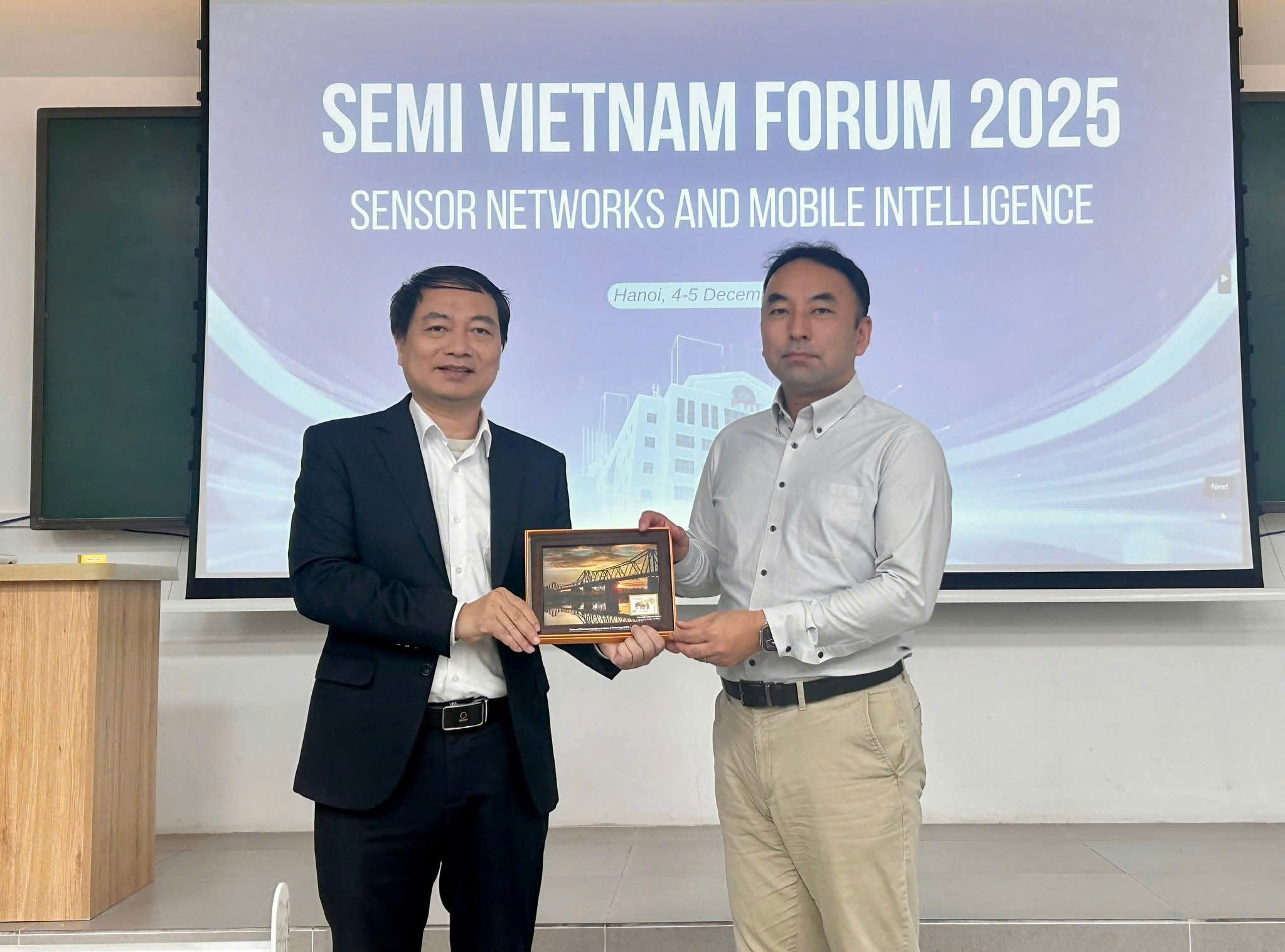
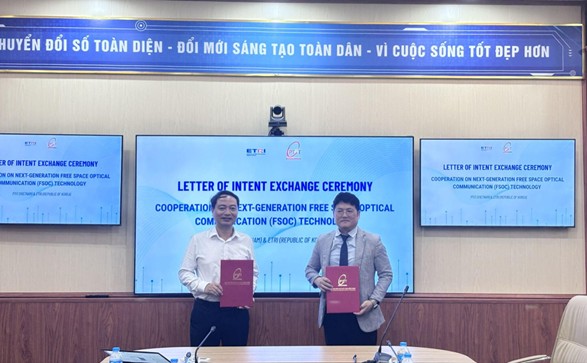
Assoc. Prof. Dr. Dang The Ngoc poses for a commemorative photo at the international cooperation event between PTIT and the IEICE association of Japan.
Another reality is that currently in Vietnam, most aerospace training programs still focus on mechanics, aerodynamics, or aircraft maintenance. Meanwhile, there remains a significant gap in specialized training in areas such as satellite communications, space networks, space-based optical communications, or satellite cybersecurity. PTIT sees this as a strategic gap that the Academy has the capacity to pioneer in developing.
Therefore, PTIT is not only opening a new academic program, but is also preparing human resources for the communication and space infrastructure of the future – where satellites, AI, 6G networks, and intelligent systems will become an essential part of the digital economy.
Editorial Board: Many parents, upon hearing the term “aerospace,” often think it’s a field too far-fetched or only for technologically advanced nations. In your opinion, where do the real opportunities for Vietnamese students in this field lie?
Associate Professor Dr. Dang The Ngoc: It’s true that when people hear the term “aerospace,” many immediately think of rockets, spacecraft, or space exploration programs of major powers. But in reality, the aerospace industry has changed significantly. It’s no longer a field exclusively for nations with massive space programs, but is becoming part of the global digital infrastructure, directly linked to life and the digital economy.
The real opportunities for Vietnamese students don’t necessarily lie in missile manufacturing, but rather in core technologies serving space connectivity and data. Examples include satellite internet, aviation communications, 5G/6G mobile networks integrated with satellites, navigation and positioning systems, UAV control, satellite data analysis, and space cybersecurity. These are all fields where Vietnam can fully participate and develop high-quality human resources.
More importantly, the current global trend is “NewSpace”—that is, the space industry is shifting from a government-led model to one with strong participation from technology and telecommunications businesses. This creates many new opportunities for electronics and telecommunications engineers, information technology specialists, AI experts, and data scientists—fields in which Vietnamese students have strengths and the ability to adapt very quickly.
PTIT chose the “Aerospace Communication Engineering” direction for that very reason. We don’t follow the traditional aerospace engineering path, but focus on technologies that intersect telecommunications, the Internet, IoT, AI, and space. This field is well-suited to PTIT’s training capabilities and also offers Vietnamese students more opportunities to compete internationally.
Furthermore, domestic demand is also becoming increasingly evident. Vietnam is accelerating digital transformation, developing national digital infrastructure, satellite technology, resource monitoring, smart logistics, maritime, aviation, and high-tech defense. These fields all require engineers with expertise in space communication systems and next-generation networks.
I think the most important thing is that students shouldn’t view this field as something “far-fetched,” but rather as a technology of the future. Just like AI or semiconductor technology were considered very distant a few years ago, but are now strategic necessities. The same applies to aerospace – those who prepare early will have a huge advantage in the next 5-10 years.
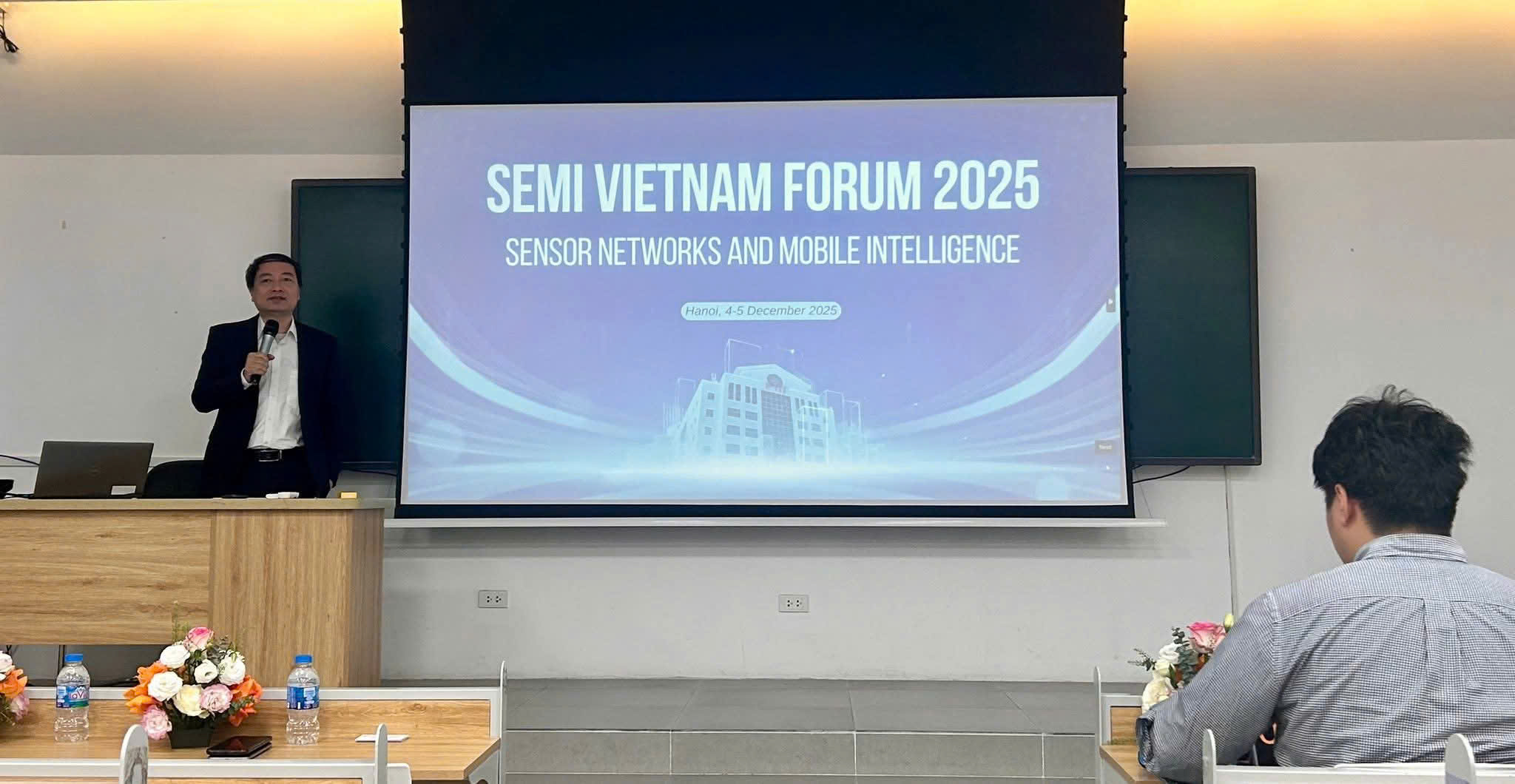
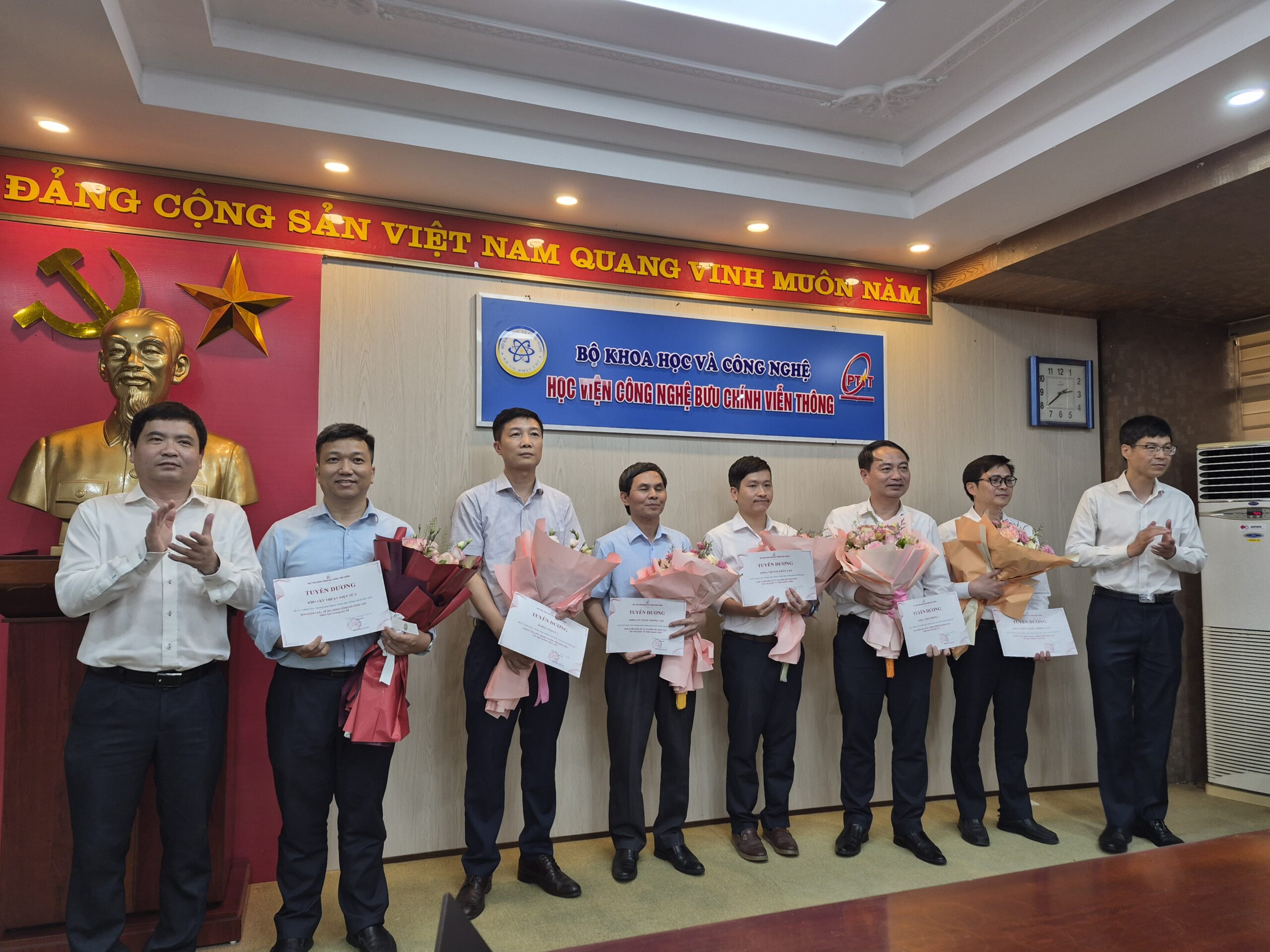
Assoc. Prof. Dr. Dang The Ngoc presented his report at the SEMI Vietnam Forum 2025.
Editorial Board: What is the biggest difference between Aerospace Communications Engineering and traditional Telecommunications or Electronics majors? What subjects does this program require students to be proficient in: math, physics, or programming? Would a student who isn’t a “technological genius” be able to pursue this program?
Associate Professor Dr. Dang The Ngoc: The Aerospace Communication Engineering program belongs to the field of Electronic and Telecommunications Engineering, but it is an “intersecting” program between modern telecommunications and space technology. While traditional Electronics and Telecommunications majors mainly focus on terrestrial networks, electronic devices, or conventional information systems, this program expands that knowledge to the aerospace environment.
Students not only learn about telecommunications networks, radio, or signal processing, but also gain access to satellite communication systems, 5G/6G mobile networks integrated with satellites, aeronautical communications, navigation systems, radio antennas for space, terrestrial networks, AI for autonomous systems, and space data analysis. Simply put: this is a program to train engineers for the “connectivity infrastructure of the future,” where the Internet extends beyond the ground to the sky and into space.
In terms of academic ability, this program requires a relatively strong foundation in mathematics, physics, and logical thinking, as it remains a high-tech engineering field. Mathematics helps students understand signals, networks, and system optimization; physics supports knowledge of electromagnetic waves, wave propagation, satellites, and radio frequencies; and programming is increasingly important as modern systems integrate software, AI, and data processing.
However, the most important thing is not to be a “technological genius,” but to have a learning mindset and perseverance. In fact, many successful engineering students are not outstanding from the start, but rather those who are hardworking, passionate about exploring new technologies, and know how to develop step by step.
The program is also designed with a progression from basic to advanced levels. Students will learn the fundamentals of mathematics, physics, and programming first, before moving on to satellite communication systems or space technology. Furthermore, PTIT’s strength lies in practical training and digital technology, giving students the opportunity to learn through projects, simulations, and real-world applications, rather than just dry theoretical learning.
I think that for today’s students, if they love technology, enjoy exploring new fields, and want to work in an international environment, then this is a very worthwhile training program to consider. You don’t need to be a “genius,” but you do need a willingness to learn because this is a rapidly changing field with always many new things to discover.
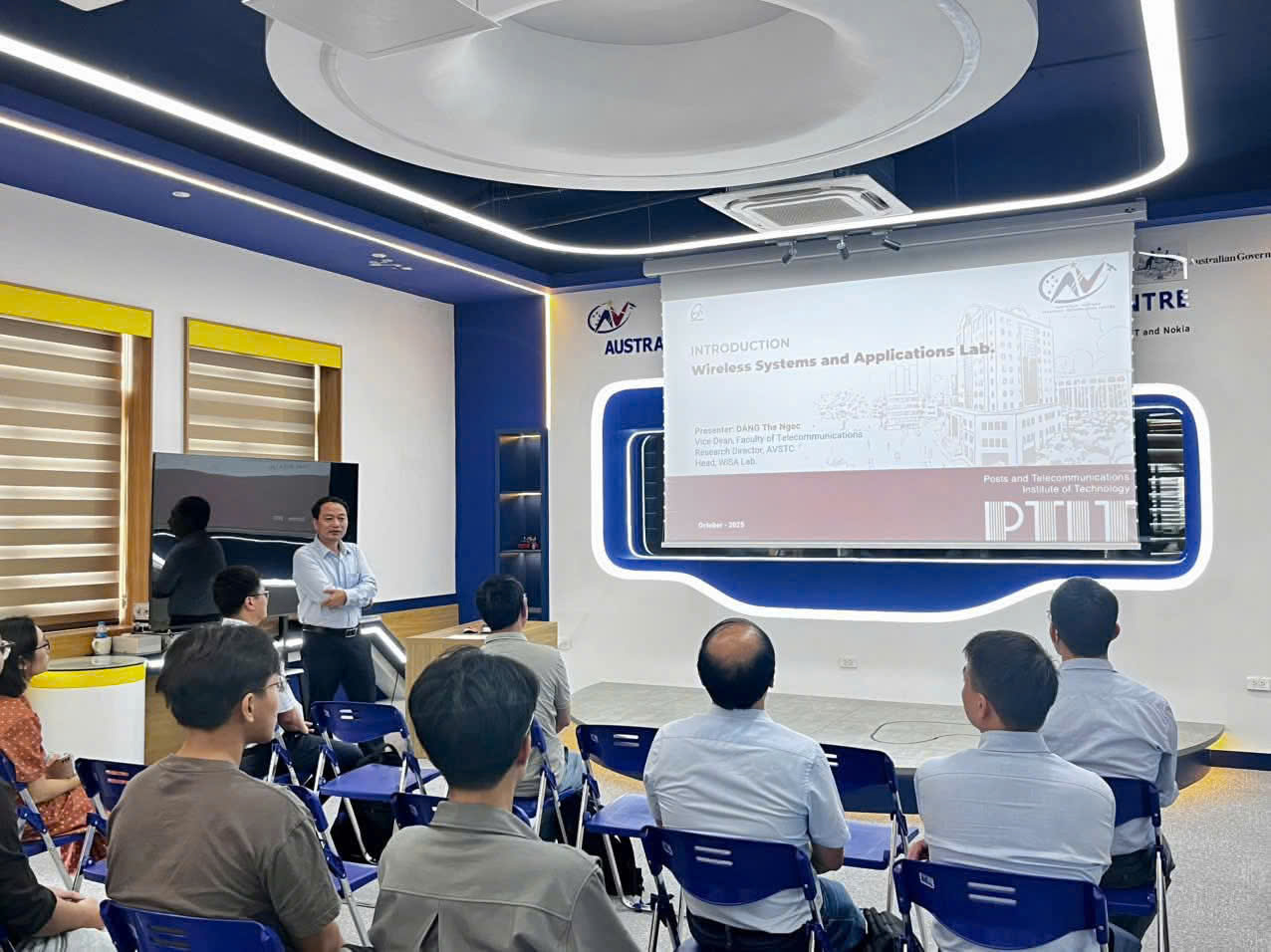
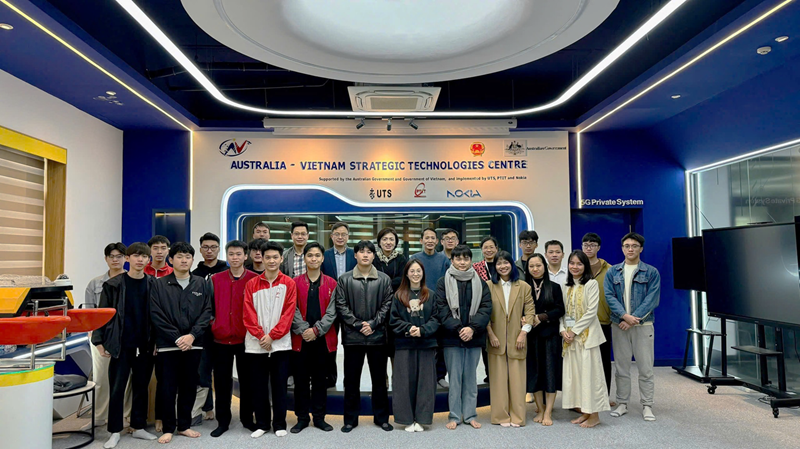
Assoc. Prof. Dr. Dang The Ngoc introduces the Wireless Systems and Applications Laboratory of PTIT.
Editorial Board: What preparations did PTIT make regarding faculty, labs, and technology before deciding on student recruitment ? Do students have the opportunity to access satellite systems, UAVs, or real-world space communication technologies during their studies , sir ?
Assoc. Prof. Dr. Dang The Ngoc: Before developing the Aerospace Communication Engineering program, PTIT had made quite thorough preparations in terms of professional staff, technological orientation, and research-practice ecosystem. A major advantage of the Academy is its very strong foundation in telecommunications, wireless communication, computer networks, signal processing, embedded systems, and AI – all core technologies of modern aerospace systems.
Regarding the faculty, the program includes lecturers and researchers from various related professional groups such as wireless telecommunications, antennas, optical communications, AI, data processing, and network systems. At the same time, PTIT also aims to expand cooperation with technology companies, research institutions, and partners in the aerospace sector to support teaching, update technology, and enhance the practical relevance of the training program.
In terms of facilities and laboratories, PTIT currently has numerous laboratories serving foundational fields such as radio, antennas, IoT, computer networks, AI, and embedded systems. When launching the new program, the Academy will continue to invest in simulating and integrating space communication systems, satellite networks, and intelligent control. This is an approach adopted by many universities worldwide, as digital simulation and digital twin play a crucial role in modern aerospace.
Furthermore, PTIT also aims to strengthen research projects, technology competitions, and business collaborations so that students can participate in real-world problems from an early age. The program’s goal is not only to train theoretical knowledge, but also to help students develop system design capabilities, interdisciplinary technological thinking, and the ability to adapt to new technologies of the digital age.
It can be said that PTIT did not start from scratch, but is developing this program based on the Academy’s core strengths in telecommunications and digital technology that have been built over many years, while expanding into the field of space – a strategic technological direction for the future.
Editorial Board: If you had to briefly explain to parents, “Why should we choose this training program at PTIT instead of waiting for the market to develop before enrolling?”, how would you answer?
Associate Professor Dr. Dang The Ngoc: If we wait until the market is fully developed before learning, then the opportunity to be a pioneer will almost be gone. Strategic technology sectors like AI, semiconductors, and cybersecurity all demonstrate one thing: those who are first always have a huge advantage.
The same applies to Aerospace Communications Technology. Currently, the world is entering a boom phase of satellite internet, 5G/6G mobile networks integrated with satellites, UAVs, and intelligent space systems. Although Vietnam does not yet have a large-scale aerospace industry, the demand for digital infrastructure, satellite connectivity, and space technology will certainly increase sharply in the next 5-10 years.
Choosing to study this major at PTIT now means students have the opportunity to become part of a pioneering generation of engineers, receiving early preparation in core technologies and gaining a competitive advantage when the market booms. More importantly, PTIT has a clear strength in telecommunications, the Internet, and digital technology – the core foundations of modern aerospace communication.
In short: this isn’t just about learning for today’s job, but about preparing for the technological infrastructure of the future.
We would like to express our sincere gratitude to Associate Professor Dr. Dang The Ngoc.
Source: https://ptit.edu.vn/ky-thuat-truyen-thong-hang-khong-vu-tru-ptit-tien-phong-dao-tao-ky-su-cho-ha-tang-ket-noi-cua-tuong-lai/